

 English
 русский
 Español
 Português
 عربى
عربى
 Türk
Türk








+86 18395326713
Sep 04, 2025
In our daily lives, water is an indispensable source of life. We rely on it for cooking, cleaning, bathing, and maintaining the normal operation of our homes. However, when the water flow becomes weak, or the source needs to be drawn from deep underground, an inconspicuous but vital device emerges—the household water pump. It's like the heart of the home's water supply system, quietly delivering every precious drop of water to us. Yet, precisely because of its silent role, many people know very little about it, leading to frequent confusion during selection, installation, and use.
Have you ever endured the embarrassment of a weak, trickling shower due to low water pressure in a high-rise apartment? Have you ever worried about how to get water from your own well in a remote suburban area? Or, have you ever been in a state of panic because of unexpected flooding in the basement? Behind all these scenarios lies a common solution: a suitable household water pump. It is not just a simple mechanical device; it is a strong backing that guarantees our quality of life and solves our water-related problems.
This article aims to provide you with a detailed, encyclopedic guide to household water pumps. We will delve into every aspect, from basic knowledge to advanced maintenance, to help you transition from a complete novice to an expert capable of independently solving your home's water supply issues. We will lift the veil of mystery surrounding household water pumps, allowing you to understand their working principles, types, selection criteria, installation steps, daily maintenance, and common fault diagnosis and troubleshooting. Through this article, you will realize that a correctly selected, properly installed, and meticulously maintained household water pump is not just a tool, but a bridge connecting life on the surface with the spring of life below ground, and a solid guarantee for your home's water peace of mind.
To choose the right household water pump, you must first understand its wide variety of types, each with a specific design and purpose. It's like choosing the right 'tool' for different 'water tasks' in your home; choosing correctly ensures twice the result with half the effort.
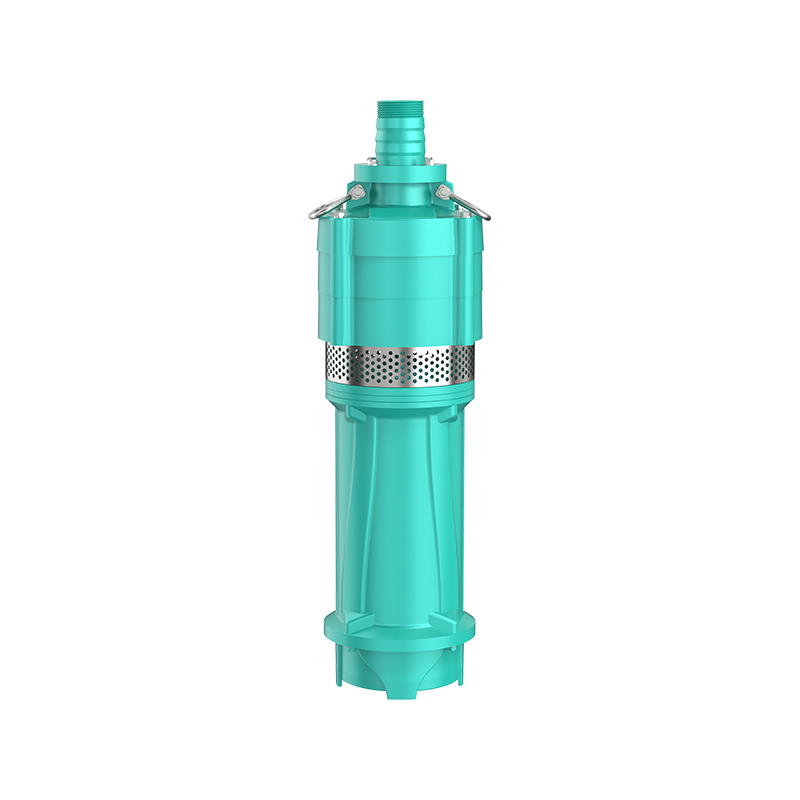
In many rural or suburban areas, household water supply relies on private groundwater wells. When the water source is buried dozens or even hundreds of meters deep, ordinary surface pumps are simply not up to the task. At this point, the deep well pump is the only and most professional solution. Its design is very unique, usually cylindrical and slender, specifically made to delve into the deep groundwater layer. The greatest advantage of a deep well pump is its astonishing head capacity, allowing it to effortlessly transport water from the depths to the surface, meeting the household's daily needs for drinking, irrigation, and even livestock watering.
The working principle of a deep well pump is to use the rotation of multi-stage impellers to progressively lift the water from the bottom to the top of the pump body, thereby generating a powerful head. Due to its special working environment—being submerged in water for extended periods—the deep well pump's casing is usually made of high-quality stainless steel or corrosion-resistant materials to withstand the erosion of minerals and impurities in the water, ensuring the equipment's durability and stability. In addition, to prevent damage to the pump body, deep well pumps are often equipped with motor overload protection and water shortage protection functions. When the water level in the well is too low, it will automatically stop working to prevent dry running from burning out the motor. For those families with private wells or those living in remote areas who need to solve their own water supply problems, the deep well pump is a solid foundation for ensuring domestic water, it is not just a tool, but a bridge connecting life on the surface with the spring of life below ground.
Have you ever been frustrated by the weak water flow in your shower? Or have your washing machine or water heater been unable to operate normally due to insufficient water pressure? All these problems can be solved by installing a booster pump. A booster pump is usually installed at a certain point in the home's water supply pipeline. Its working principle is that when the water pressure in the pipe falls below a preset value, it will automatically start, increasing the pressure and flow rate of the water to solve the problem of insufficient pressure. Booster pumps are generally divided into two types: one is a local booster pump installed directly before a water heater or showerhead, specifically used to increase the water pressure for a particular appliance; the other is a whole-house booster pump installed after the main water valve, which can provide stable water pressure for the entire family.
Modern booster pumps are mostly equipped with intelligent control functions. For example, a booster pump with a pressure tank can store a certain amount of water, reducing frequent pump startups, thereby extending the equipment's lifespan and reducing noise. A booster pump with variable frequency technology can automatically adjust the motor speed according to water consumption and pressure changes, ensuring "as much pressure as you need," which provides a comfortable water experience and avoids unnecessary energy waste. There are many types of booster pumps, from compact shower booster pumps to pipeline booster pumps that can provide stable water pressure for the entire house. They are typically low-noise and easy to install, making them a secret weapon for improving the quality of life for families in high-rise apartments, older residential communities, or those with low water pressure during peak hours.
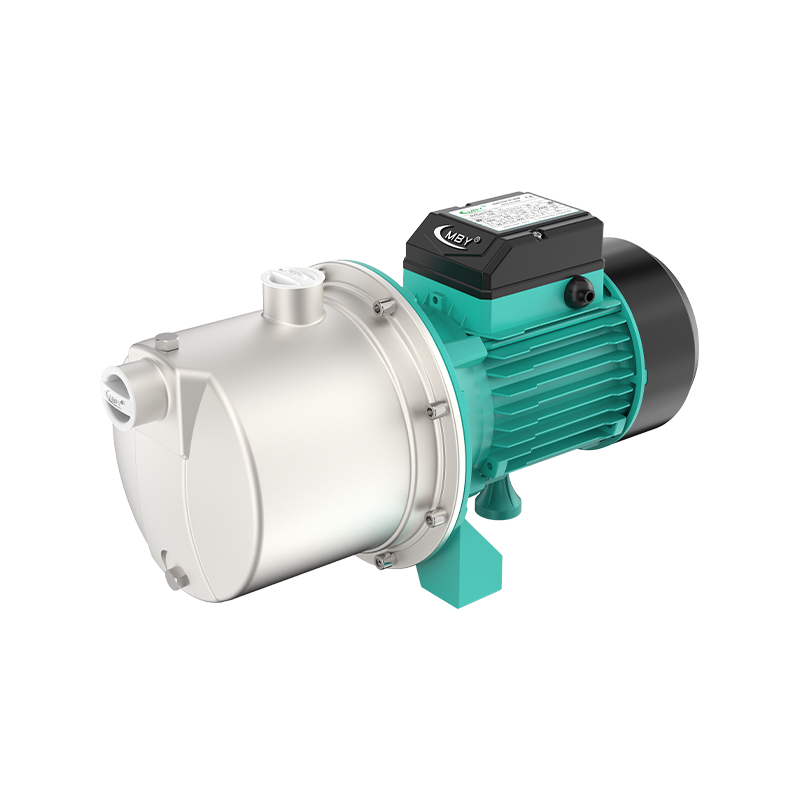
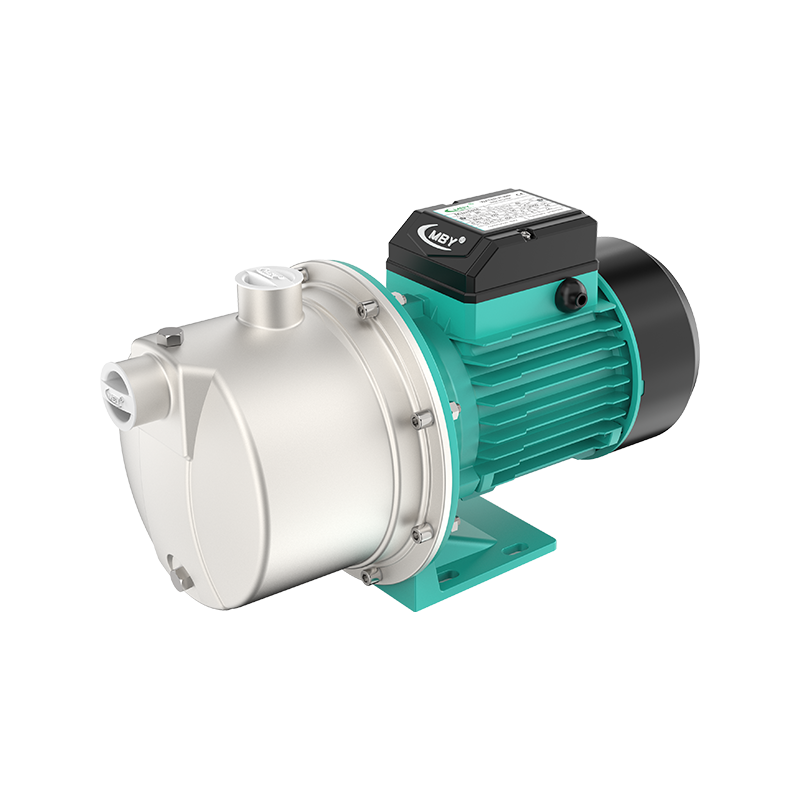
If your need is to flexibly draw water from a pool, tank, or river for garden watering, crop irrigation, or simple drainage, then the self-priming pump would be your ideal choice. The most outstanding feature of a self-priming pump is its 'self-priming' ability, meaning it can expel the air in the pipe and draw in water on its own without needing external priming. This feature greatly simplifies operation, making the self-priming pump easy to move and use anytime, anywhere, without complex preparation. Its structure is typically compact and lightweight, making it easy to carry and store.
The working principle of a self-priming pump is that upon startup, the impeller inside the pump body rotates at high speed, creating a negative pressure that sucks in and expels the air in the pipeline until water is drawn into the pump body. Once the pump body is filled with water, the pump begins to operate normally. This type of pump has a limited suction lift, usually between 5-8 meters, making it more suitable for drawing water from surface sources. Whether for home gardening, cleaning a fish pond, or dealing with small-scale flash flooding, the self-priming pump demonstrates high flexibility and practicality, acting like a mobile water station, always ready to solve your water needs.
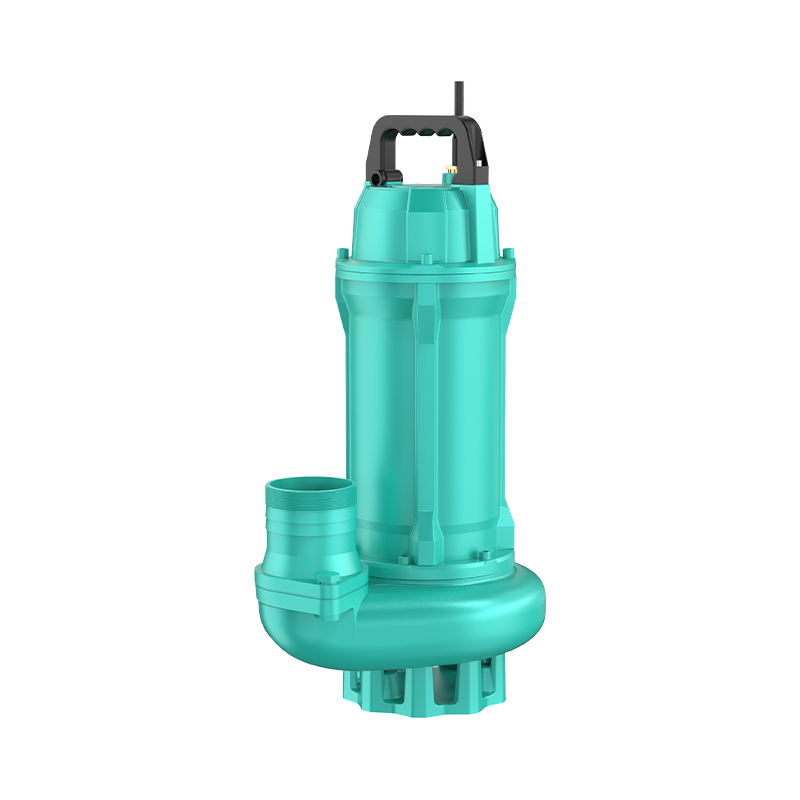
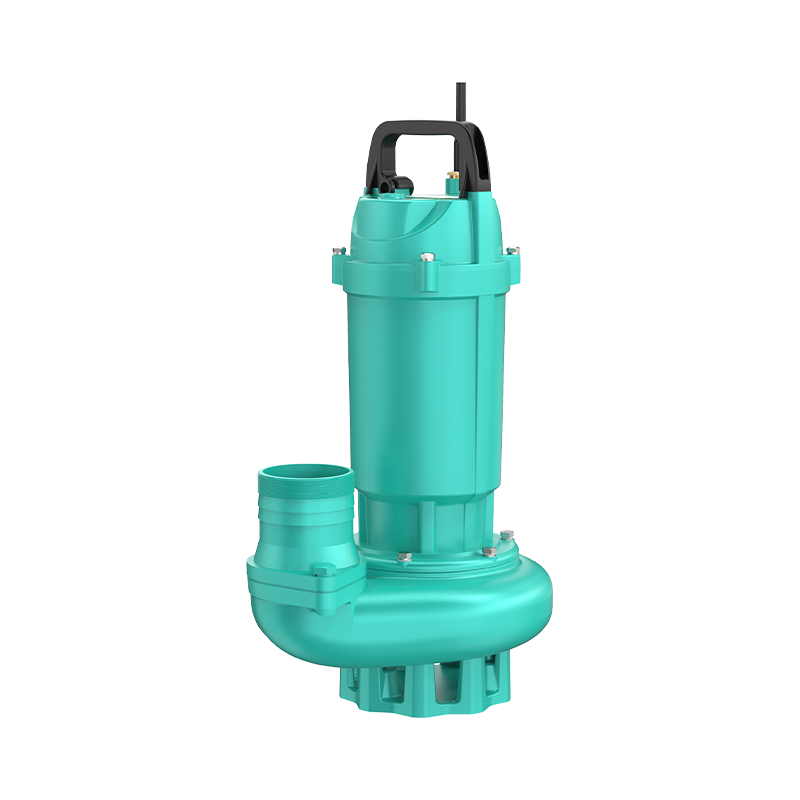
When facing basement flooding, garage water ingress, or the need to clean a large pool, the submersible pump is the most professional solution. Its design allows it to be completely submerged in water to work. The motor and pump body are sealed together with a tight waterproof seal, allowing it to directly pump out accumulated water from underwater. When working, because the pump body is located underwater, the noise it produces is very low and can be almost ignored. In addition, some specialized submersible sewage pumps are also equipped with powerful cutting functions, which can handle sewage containing fibers, particles, and other impurities, making them a powerful tool for dealing with complex drainage problems.
Submersible pumps come in various models, from small household drainage pumps to large industrial submersible pumps, meeting drainage needs of different scales. They are usually equipped with a float switch, which can automatically start or stop the pump based on the water level, allowing for unattended, automated drainage. This type of pump is very effective in scenarios such as basements, storm drains, and pools where water needs to be pumped from a low point to a high point. They play a crucial role in the background, protecting our homes from water damage.
When shopping for a household water pump, faced with the dense numbers and technical terms in the manual, many people feel confused. But in reality, as long as you grasp a few core parameters, you can read this information like an expert and accurately determine which pump is best for your needs. Understanding these parameters is key to the selection process, as they directly determine the pump's performance and practical effect.
Flow rate is the primary indicator of a water pump's efficiency. It refers to the volume of water the pump can deliver per unit of time. It is usually measured in "liters per minute" (L/min) or "cubic meters per hour" ($m^3/h$). The magnitude of the flow rate directly determines your water experience and work efficiency.
For Booster Pumps: If your goal is to solve the problem of low water flow in the shower, you need to choose a booster pump with a high enough flow rate to ensure a strong water stream even when multiple people are using water at the same time. Generally, the peak flow demand for a family is between 30-50 L/min.
For Water Pumps: If you want to quickly drain a basement or change the water in a fish pond, a high-flow pump will greatly shorten the work time. For example, a 500-liter pool, if you choose a pump with a flow rate of 50 L/min, theoretically it would only take 10 minutes to drain.
Head is another core performance parameter of a water pump. It refers to the vertical height to which the pump can deliver water. The unit is typically "meters" (m). Head is not just the actual height the pump can lift water; it also includes the pressure loss caused by friction and bends in the pipeline.
Calculation Points: When choosing, the actual head should be greater than or equal to the vertical height you need (such as the height from the bottom of a well to a ground-level tank), and you must add the losses caused by pipeline bends and length. A simple estimation method is to add the actual vertical height and horizontal distance (every 10 meters of horizontal distance is approximately equal to 1 meter of vertical head), and then reserve a 20% safety margin.
For example: If your well is 15 meters deep and you need to transport water to a house 30 meters horizontally from the wellhead, then the pump head you theoretically need is at least 15m + 30m / 10 = 18m. Considering the safety margin, you should choose a pump with a head of around 22 meters.
Power is the electrical energy consumed by the water pump during operation, with units of "watts" (W) or "kilowatts" (kW). The magnitude of the power directly affects your electricity bill. Generally, the higher the power of a pump, the higher its flow rate and head, but the energy consumption will also increase accordingly.
Balancing Performance and Energy Consumption: When choosing, we should not blindly pursue high power. The most ideal choice is to select a model with lower energy consumption, based on your actual needs, while still meeting the required flow rate and head.
The size of the inlet and outlet is usually in inches (inch) or millimeters (mm), and it determines the size of the pipes the pump can connect to.
Compatibility: Before purchasing, be sure to measure the size of your existing pipes to ensure the pump's inlet and outlet match them perfectly. If the sizes don't match, you will need to purchase additional adapters, which will increase the complexity and cost of installation.
By understanding and comparing these four core parameters, you can easily find the household water pump that best suits your family's water needs among numerous products.
After understanding the types of water pumps and their core parameters, the next challenge is how to apply this knowledge to the actual purchasing process. The market for water pumps is dazzling with brands and models, but by following these key steps, you can easily find the 'one' that is most suitable for your family's needs.
Before browsing products, ask yourself a few key questions:
Why do you need a pump? Is it to solve the problem of low water pressure at home, to draw water from a well, or for garden watering and basement drainage?
What tasks do you want it to accomplish? For example, do you want it to send water to a certain floor? How much water do you need to meet the daily needs of your home?
What is your budget? This will help you lock in the right brand and model.
Clarifying your purpose is the first step to choosing the correct pump type. Booster pumps, deep well pumps, self-priming pumps, or submersible pumps, each has a specific mission. Never use a booster pump to draw deep well water, and vice versa, as this will not only be ineffective but may also damage the equipment.
This is the most important step in the purchasing process.
Flow Rate Calculation: Estimate based on the number of family members and their water habits. Generally, the peak water consumption for a family of three is around 30-50 liters per minute (e.g., morning washing). If you need to use multiple faucets or appliances at the same time, the flow demand will be higher.
Head Calculation: The head calculation needs to be more precise. It not only includes the actual height the pump needs to lift water (such as the height from the bottom of a well to a water tower), but also considers the friction loss in the pipes. The longer the pipe and the more bends, the greater the loss. A simple estimation method is to add the actual vertical height and horizontal distance (every 10 meters of horizontal distance is approximately equal to 1 meter of vertical head), and then reserve a 20% safety margin.
The material of the water pump directly determines its service life and safety.
Pump Body Material: Common materials include cast iron and stainless steel. The cast iron pump body is sturdy and durable, but may rust with long-term exposure to water. The stainless steel pump body is more corrosion-resistant, especially suitable for transporting drinking water or being submerged in water for a long time.
Impeller Material: The impeller is the core component of the water pump; it transfers energy to the water. High-quality copper or stainless steel impellers provide higher efficiency and a longer service life.
Considering the home environment, the noise of the water pump is also a factor that cannot be ignored.
Noise Level: Many product manuals will indicate the noise level, usually in decibels (dB). Choosing a pump with a lower noise level can significantly improve living comfort, especially when it is installed indoors or near living areas.
Energy Efficiency: Different brands of pumps may have different energy consumption for the same performance. Choosing a product with a high energy efficiency rating, although the initial investment may be slightly higher, will save you a lot on electricity bills in the long run.
Finally, choosing a brand with a good reputation and comprehensive after-sales service is crucial. A good brand not only means that the product quality is guaranteed, but more importantly, when the product has a problem, you can get professional technical support and repair services in a timely manner.
No matter how good a water pump's performance is, if it is not installed correctly, it will not only affect its work efficiency but also may pose safety hazards. Correct installation is key to ensuring the long-term stable operation of the water pump. Here are a few core steps and precautions for installing a household water pump.
Before starting the installation, be sure to perform a comprehensive check. First, confirm that you have completely cut off the power supply; this is the most important safety measure to prevent any accidental electric shocks. Next, carefully check the pump itself to ensure that no damage occurred during transportation. At the same time, you need to choose a suitable installation location for the water pump:
Stable and Secure: The installation surface must be solid and flat to prevent the pump from moving or producing abnormal noise due to vibration during operation.
Dry and Ventilated: Avoid installing the pump in a humid, enclosed, or corrosive gas environment, as these conditions will damage the pump body and motor, shortening its service life.
Easy to Maintain: Ensure there is enough space around the installation location for easy access for daily inspection and maintenance.
After placing the pump in the selected location, you need to securely fix it to the ground with bolts. The next step is the pipe connection, which is the most detail-oriented part of the process.
Inlet Pipe: Ensure that the connection of the inlet pipe is well-sealed and does not leak air. Even a small air leak can cause the pump to fail to draw water, and even damage the pump body. It is recommended to use thread sealant tape or gaskets to strengthen the sealing effect.
Outlet Pipe: The connection of the outlet pipe must also be tight to prevent leakage when the water pressure is too high. Pay attention to the pipe's direction when connecting, and try to minimize bends to reduce water flow resistance.
The electrical connection of the water pump is particularly important, and it is strongly recommended to have it done by a professional electrician.
Power Cord: Ensure that the power cord specification meets the pump's power requirements and is not too thin.
Grounding Wire: Correctly connecting the grounding wire is the key to preventing electric leakage accidents. The grounding wire should be firmly connected to the grounding terminal on the pump's casing.
Protective Devices: Install a suitable power switch and a residual current device (RCD), which can automatically cut off the power when the pump has an abnormality, providing an additional layer of safety.
After all connections are completed, do not rush to turn on the power.
Priming and Venting: For a self-priming pump, you need to first fill the pump body with water. For other types of pumps, you need to check if the pipeline system has been vented of air. If there is air inside the pump or pipes, the water pump will not be able to work properly.
Observation and Debugging: After the first startup, you should closely observe the pump's operating status. Pay attention to any abnormal noise, violent vibration, or water leakage. If everything is normal, it can be put into use. If you find any problems, you should immediately turn off the power and check, never operate a faulty pump.
Just as a car needs regular maintenance, daily care for a household water pump is also important. Proper maintenance can not only extend the equipment's service life but also ensure that it always operates in its best condition, avoiding breakdowns at critical moments. Here are some simple and easy maintenance and care methods.
Developing a habit of regular inspection is the best way to prevent failures. You can inspect the water pump once a month or once a quarter.
Check the Appearance: Observe the pump body for any signs of water leakage, rust, or cracks. At the same time, check if the connections of the inlet and outlet pipes are loose or leaking.
Clean the Filter: Many water pumps are equipped with a filter at the inlet to prevent sand, debris, and other impurities from entering the pump body. Regularly remove and clean the filter to avoid blockages and ensure smooth water flow.
Aural Inspection: When the water pump is working, pay attention to any abnormal noise. Sharp friction sounds, buzzing, or violent vibrations may be signals of worn bearings, a stuck impeller, or unstable installation.
If you live in a region where winter temperatures drop below freezing, anti-freeze measures are crucial. The water inside the pump body will expand when it freezes, which can cause the pump casing to crack, leading to permanent damage.
Drain Stored Water: Before winter arrives, completely drain the water from the pump and pipes. Usually, the bottom of the pump has a drain plug.
Proper Storage: If the water pump is portable, it is best to remove it, dry it, and store it in a warm, dry place.
If the water pump needs to be idle for a long time (for example, after seasonal use), proper storage can protect it from damage.
Clean and Dry: Thoroughly clean the inside and outside of the water pump, and ensure the pump body and pipes are completely dry.
Dust and Moisture Protection: Wrap the water pump with a plastic sheet or place it in a box, and store it in a dry, ventilated place away from direct sunlight to prevent dust and moisture from eroding it.
Some older pumps or specific models may require regular lubrication. Consult your product manual to find out if the bearings or other moving parts need lubrication. If so, use the special lubricant or grease recommended by the manufacturer.
Even with meticulous maintenance, a household water pump may still have some minor problems after long-term use. Understanding the common fault symptoms and simple diagnosis and repair methods can help you solve problems at the first sign, avoiding unnecessary repair costs.
Diagnosis: First, check if the power outlet and power cord are connected correctly. Check if the fuse or circuit breaker in the fuse box has tripped. If the power is normal, listen for a buzzing sound from inside the pump. If there is a buzz, the motor may be stuck or the capacitor may be damaged; if there is no sound, it may be a problem with the power switch or the motor itself.
Simple Repair: If you find that the circuit breaker has tripped, do not reset it immediately. First, check if the pump body is overheated or if the pipes are clogged. If the pump body is overheated, let it cool down for a while before trying again. If you suspect the motor is stuck, you can try to turn the motor's fan blades with a screwdriver to see if it can be unstuck.
Diagnosis: This is usually a problem with the inlet pipe or the inside of the pump body. First, check if the inlet pipe connection is leaking air. Even a small air leak will prevent the pump from creating an effective suction. Second, check if the inlet pipe's filter or foot valve is blocked by debris.
Simple Repair: Use a screwdriver to tighten all the screws at the inlet pipe connection and re-wrap it with sealing tape. If you suspect a blockage, you can disassemble the inlet pipe and foot valve and clean them thoroughly.
Diagnosis: It is normal for a water pump to produce some noise and vibration during operation, but if the sound suddenly becomes loud or grating, it indicates a problem. This may be due to unstable installation, causing the pump body to resonate with the ground; it could also be that a foreign object is stuck inside the impeller, or the bearings are severely worn.
Simple Repair: First, check if the pump's fixing bolts are loose and tighten them. If the noise persists, you can try to disconnect the power, disassemble the pump body to check the impeller, and remove any foreign objects inside. If the noise comes from the bearings, it usually requires replacing them.
Diagnosis: Water leakage may be caused by an aging seal, a loose pipe connection, or a cracked pump body.
Simple Repair: If it is at a pipe connection, you just need to tighten the joint or replace the sealing ring. If the leak is from the pump body itself, especially at the shaft seal, this usually requires a professional repair person to replace it, and it is not recommended to do it yourself.
If the simple diagnosis and repair methods above cannot solve the problem, or if you encounter the following situations, you should immediately contact a professional repair person:
The motor is burned out or smells of scorching.
The pump body has cracks or is severely damaged.
Replacement of complex internal components like seals or bearings.
At this point, we have a comprehensive and systematic understanding of the world of household water pumps. From recognizing different types of pumps to understanding core parameters, and then to mastering correct selection, installation, maintenance, and repair techniques, we have completed a full journey.
A household water pump is not just a cold mechanical device; it is the "heart" of our home water supply system and a key to ensuring our daily water flow is smooth and comfortable. Whether it's solving the problem of drawing deep well water for a rural family, alleviating the low water pressure issue for a family in a high-rise city apartment, or handling a sudden flood, it plays a vital role with its solid and reliable performance.
We hope that through this guide, you will be able to:
Make a Smart Choice: Select the household water pump that best suits your needs.
Perform a Safe Installation: Follow the correct steps to ensure the equipment operates safely and efficiently.
Master Daily Maintenance: Extend the service life of the equipment through regular inspection and care.
Handle Common Problems: Be able to calmly cope with and solve minor faults when they occur.
A correctly selected, properly installed, and meticulously maintained household water pump can help you say goodbye to water worries and truly achieve a peaceful and carefree life.
Hot News
 Oil Immersed Submersible Electric Pump: Working Principles, Applications, and Future Trends
Sep 04, 2025
 Global Pipeline Centrifugal Pump Industry Update: High-Efficiency Double Suction and Magnetic Drive Technologies Leading the Industrial Water Treatment Revolution
Sep 04, 2025
 Complete Guide to Household Water Pumps: From Selection, Installation to Maintenance, Your Home's 'Water Butler'
Sep 04, 2025
 Can the intelligent automatic self-priming vortex water pump lead a new era in water management?
Sep 04, 2025
Get In Touch

Address 1:
No. 4 Taoyuan Road, Taozhou Town, Guangde City, Xuancheng City, Anhui Province, China
Address 2:
Daxi Town, Wenling City, Taizhou City, Zhejiang Province, China Pump Industry Intelligent Manufacturing Town