
 English
 русский
 Español
 Português
 عربى
عربى
 Türk
Türk








+86 18395326713
Nov 20, 2025
Industrial facilities rely on the stable operation of every industrial water pump to maintain fluid transfer efficiency, ensure process continuity, and support equipment safety. Yet even well-configured systems may encounter performance fluctuations, reduced flow, abnormal noise, or operational instability. Identifying the root causes and applying targeted troubleshooting strategies is essential for maintaining a durable and efficient water pump installation.
Troubleshooting is more than a maintenance step; it is a preventive strategy to stabilize system output. Industrial water pump performance issues often lead to:
Reduced process throughput
Increased energy consumption
Accelerated mechanical wear
Facility downtime
Higher operational risk
A structured troubleshooting framework improves response efficiency and supports long-term equipment reliability. It also helps industrial operators evaluate pump specifications more precisely, particularly when selecting new units from an industrial water pump factory or when adjusting system layouts.
Performance degradation typically becomes visible through predictable operational signals. These indicators serve as the first level of assessment:
| Symptom Category | Typical Manifestation | Potential Impact |
|---|---|---|
| Flow Irregularity | Reduced flow rate, unstable discharge | Lower production capacity |
| Pressure Abnormality | Insufficient pressure, unexpected drops | System imbalance |
| Mechanical Noise | Grinding, rattling, cavitation noise | Impending component damage |
| Temperature Rise | Overheating at bearings or motor | Risk of shutdown |
| Vibration | Axial or radial vibration | Alignment failure |
| Leakage | Shaft seal leakage, flange seepage | Safety hazard |
Recognizing these early signs allows maintenance teams to quickly narrow diagnostic priorities.
Loss of flow and pressure remains the most common operational challenge. Troubleshooting requires a structured evaluation of hydraulic, mechanical, and system-level variables.
Flow reduction is frequently triggered by internal resistance:
Clogged impeller channels
Debris accumulation in suction lines
Partial blockage in strainers or filters
Inadequate suction water level
To analyze hydraulic blockages, technicians should compare actual flow curves with design specifications and inspect internal channels for buildup or narrowing.
Cavitation is one of the most destructive factors affecting a water pump. It occurs when vapor bubbles collapse violently inside the pump chamber, eroding components and reducing pressure stability.
Suction head lower than required
Excessive temperature in fluid
High fluid vapor pressure
Oversized or undersized suction piping
Excessive pump speed
| Indicator | Description |
|---|---|
| Metallic knocking noise | Repeated bubble collapse inside the impeller |
| Rapid pressure drop | NPSH (net positive suction head) deficiency |
| Pitting marks on impeller | Surface erosion caused by micro-explosions |
| Reduced pumping capacity | Vapor pockets interfering with flow |
Preventing cavitation requires precise matching of pump speed, suction pipe design, and fluid characteristics—especially during the design and testing stages at an industrial water pump factory.
Mechanical vibration often signals misalignment, bearing failure, or imbalance in rotating elements.
Shaft misalignment
Impeller imbalance
Loose foundation bolts
Bent shaft
Bearing degradation
Pipe strain on pump casing
Measure vibration spectrum
Compare signature with baseline data
Inspect mechanical couplings
Verify shaft alignment using dial indicators
Check axial load distribution
Vibration troubleshooting is a key module in pump maintenance guide materials, especially for centrifugal pump and high-pressure pump applications requiring continuous operation.
The motor is the driving component of every industrial water pump, and its performance determines the overall efficiency of fluid transfer.
Excessive system pressure
Impeller diameter too large
Incorrect motor-pump matching
Bearing friction
Electrical supply instability
| Step | Inspection Focus |
|---|---|
| 1 | Motor air circulation and ventilation |
| 2 | Bearing lubrication and condition |
| 3 | Load measurement vs rated capacity |
| 4 | Electrical connections and insulation |
| 5 | Impeller clearance and hydraulic drag |
Maintaining proper motor load ensures long equipment life and reduces unplanned downtime.
Sealing integrity is essential for maintaining water pump reliability. Both static and dynamic seals can deteriorate due to operational stress.
Mechanical seal faces
Shaft sleeves
Gasketed flanges
Casing joints
Abrasive particles in fluid
Dry running
Excessive axial movement
Temperature shock
Incorrect seal installation
Selecting proper sealing materials based on fluid type and operating temperature is a crucial decision often made during product configuration at an industrial water pump factory.
Below is a reference table to accelerate on-site troubleshooting and help maintenance engineers pinpoint root causes efficiently.
| Issue | Likely Cause | Diagnostic Action | Recommended Solution |
|---|---|---|---|
| Low flow | Blocked suction, worn impeller | Inspect inlet path | Clean or replace components |
| Pressure drop | Cavitation, leakage | Measure NPSH | Adjust suction design |
| Overheating | Bearing wear, motor overload | Thermal scan | Replace bearings or rebalance load |
| Noise | Air entrainment, cavitation | Acoustic monitoring | Remove air pockets |
| Vibration | Misalignment, imbalance | Alignment test | Realign pump and motor |
| Leakage | Seal wear | Seal inspection | Replace seal set |
Troubleshooting must extend beyond the pump itself. System design issues are often the hidden causes of performance instability.
Inconsistent fluid supply
Excessive piping bends
Incorrect pipe diameter
Poor valve selection
Air accumulation in pipeline
Incorrect installation height
Optimizing the surrounding system is crucial for ensuring long-term operating efficiency in large-scale fluid transfer system installations.
A preventive routine significantly minimizes troubleshooting frequency.
Daily: noise, temperature, pressure reading
Weekly: lubrication level, suction condition
Monthly: vibration spectrum, motor current
Quarterly: seal condition, shaft alignment
Annually: full disassembly if required
Maintain stable inlet water level
Control pump speed based on actual flow demand
Reduce high-frequency start-stop cycles
Monitor real-time performance curves
These steps support the long-term health of every water pump and ensure continuous production in industrial facilities.
Correct pump selection during the initial procurement stage reduces future maintenance workload. High-flow-rate pumps, corrosion-resistant pumps, and energy-efficient models are common options based on application scenarios.
| Specification Parameter | Typical Range | Application Purpose |
|---|---|---|
| Flow capacity | 10–3000 m³/h | Matches facility throughput |
| Pressure rating | 0.3–6 MPa | Supports process pressure |
| Material | Cast iron / stainless steel | Resists corrosion and wear |
| Motor power | 1–500 kW | Ensures adequate torque |
| Temperature tolerance | Up to 180°C | High-temperature applications |
This table provides practical reference points commonly used in industrial water pump factory design and R&D processes.
Advanced diagnostic tools reduce uncertainty and accelerate troubleshooting:
Vibration analyzers
Thermal imaging cameras
Real-time pressure sensors
Flow meters
Automated performance monitoring platforms
These technologies support predictive maintenance, allowing teams to detect anomalies before failures occur.
Effective troubleshooting of industrial water pump performance issues requires:
Clear symptom recognition
Systematic diagnostic steps
Accurate assessment of hydraulic and mechanical variables
Preventive maintenance strategy
Proper pump selection and configuration
Stable operating conditions
By integrating these principles, facilities can significantly improve the long-term performance, energy efficiency, and reliability of every industrial water pump in operation. A well-structured troubleshooting approach not only extends equipment lifespan but also supports stable industrial output, making it a fundamental component of modern fluid transfer management.
Hot News
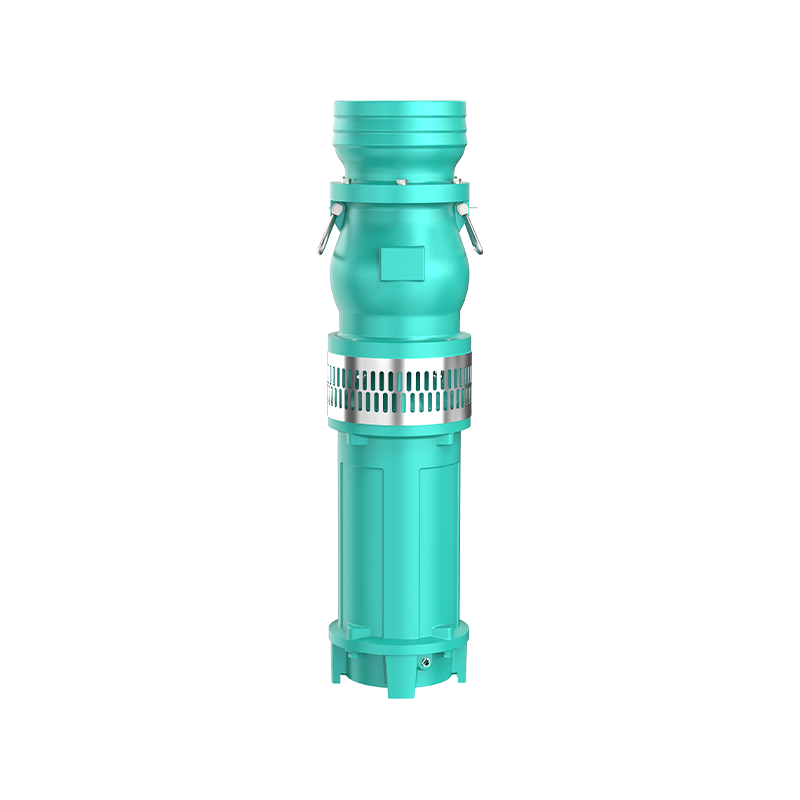 Oil Immersed Submersible Electric Pump: Working Principles, Applications, and Future Trends
Sep 04, 2025
 Global Pipeline Centrifugal Pump Industry Update: High-Efficiency Double Suction and Magnetic Drive Technologies Leading the Industrial Water Treatment Revolution
Sep 04, 2025
 Complete Guide to Household Water Pumps: From Selection, Installation to Maintenance, Your Home's 'Water Butler'
Sep 04, 2025
 Can the intelligent automatic self-priming vortex water pump lead a new era in water management?
Sep 04, 2025
Get In Touch

Address 1:
No. 4 Taoyuan Road, Taozhou Town, Guangde City, Xuancheng City, Anhui Province, China
Address 2:
Daxi Town, Wenling City, Taizhou City, Zhejiang Province, China Pump Industry Intelligent Manufacturing Town